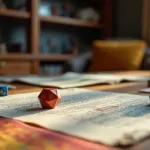
An RPG game, or role-playing game, is a type of game that allows players to step into the shoes of unique characters and make meaningful choices within a fictional world. Unlike straightforward action or puzzle titles, an RPG game blends storytelling, strategy, and progression to create a rich, layered experience.
Players don’t simply “play” a character—they become one, making impactful decisions that influence the world around them. Whether played on a tabletop with friends or through immersive digital adventures on consoles and PCs, an RPG game offers deep narrative engagement, character development, and exploration that go far beyond simple entertainment.
At the heart of every RPG is the idea of role-playing—stepping into a persona, developing abilities, solving challenges, forming alliances, and making choices that shape the story. Many RPGs include quests, dialog systems, items to collect, skill trees, and large worlds filled with lore. The genre continues to evolve, but its focus on narrative, growth, and decision-making remains consistent across decades.
Origins and History of RPG Games
The origins of RPG games can be traced back to the early 1970s, when tabletop role-playing emerged as an innovative blend of storytelling, strategy, and imagination. The most influential example was Dungeons & Dragons, created in 1974 by Gary Gygax and Dave Arneson. D&D introduced foundational elements such as character classes, stats, leveling, dice-based combat, and collaborative storytelling. These ideas defined the structure of role-playing games and became the backbone of both tabletop and digital RPGs.
As technology advanced, developers began experimenting with ways to convert these table-driven systems into early computer programs. The origins of RPG games soon expanded into academic labs and university networks, where programmers created text-based adventures and dungeon simulators. These early digital RPGs reproduced character creation, combat rules, and exploration in a computerized format.
By the 1980s, RPGs transitioned to personal computers and home consoles. Titles like Akalabeth, Ultima, Wizardry, and Dragon Quest further shaped the genre, introducing graphical interfaces, overworld maps, and more dynamic combat. These innovations built on the origins of RPG games and paved the way for the complex role-playing experiences we enjoy today.
Different Types of RPGs
RPGs come in many forms, and understanding these categories helps players discover the types of experiences they enjoy most.
1. Tabletop RPGs
These involve players gathering around a table, guided by a Game Master (GM). Players describe actions verbally, roll dice, and collectively create a story. Examples include:
- Dungeons & Dragons
- Pathfinder
- Call of Cthulhu
2. Western Computer RPGs (CRPGs)
These prioritize player choice, open-ended exploration, and complex narratives. Examples:
- Baldur’s Gate
- Fallout
- Divinity: Original Sin
3. Japanese RPGs (JRPGs)
These often feature fixed characters, structured narratives, and turn-based combat. Examples:
- Final Fantasy
- Persona
- Dragon Quest
4. Action RPGs (ARPGs)
Combat happens in real time, blending action and progression. Examples:
- The Witcher
- Dark Souls
- Diablo
5. MMORPGs
Massively multiplayer online RPGs allow thousands of players to interact in persistent worlds. Examples:
- World of Warcraft
- Final Fantasy XIV
- Guild Wars 2
6. Indie and Hybrid RPGs
Smaller studios often combine genres or experiment with storytelling, mechanics, and aesthetics. Examples:
- Undertale
- Disco Elysium
- Hades
Each type offers a unique approach to character progression, storytelling, and player freedom.
Character Creation and Customization
Character creation and customization are essential features of most RPGs. They allow players to establish identity, define strengths and weaknesses, and shape how the game will be played. Typical elements include:
- Race or species (human, elf, alien, android)
- Class or role (warrior, mage, rogue, healer)
- Attributes (strength, intelligence, agility, charisma)
- Cosmetic customization (hair, face, armor colors)
- Skill trees that let players progress along chosen playstyles
- Backgrounds or origins, which influence dialog and quests
Deep customization ensures that no two journeys feel exactly alike and gives players ownership of their character’s identity and evolution.
Storytelling and Player Choices
In an RPG, storytelling and player choices are tightly intertwined. While some RPGs follow linear plots, many use branching narratives where decisions affect relationships, events, and endings. Whether choosing allies, resolving conflicts, or determining moral outcomes, these choices reinforce immersion and give the player agency.
Some titles include morality systems, dialogue wheels, or multiple endings, shaping how the story unfolds based on player behavior. Even in games with a fixed story, RPGs use world-building, lore, and character development to make the narrative feel rich and impactful.
Combat Systems in RPGs
Combat is a major component of most RPGs and varies drastically by subgenre. Common types of RPG combat systems include:
- Turn-based combat – players take turns executing moves strategically
- Real-time combat – players fight dynamically with timing and reflexes
- Tactical/strategy combat – grid-based movement and careful planning
- Hybrid systems – mixing real-time and menu-based actions
Good combat systems reward strategy, skill progression, party management, and tactical decision-making. Combined with loot, gear upgrades, and boss battles, combat becomes a core source of challenge and excitement.
Exploration and World-Building
Exploration and world-building are vital to creating immersive RPG experiences. A well-designed world feels alive, with:
- Distinct regions and cultures
- Environmental storytelling (ruins, notes, carvings, artifacts)
- Hidden pathways, secrets, and side quests
- Dynamic day-night cycles or weather
World-building gives meaning to exploration. Players form emotional connections to settings, discover lore organically, and gradually understand the world’s history, politics, and myths.
Popular RPG Games Across Platforms
Numerous RPGs across consoles, PC, and mobile have defined the genre. Some of the most influential and popular RPG games include:
- The Elder Scrolls V: Skyrim – open-world freedom and exploration
- The Witcher 3 – narrative depth and world design
- Final Fantasy series – iconic JRPG storytelling and style
- Mass Effect – branching choices and sci-fi world-building
- Persona series – social simulation and dungeon-crawling
- World of Warcraft – the most successful MMORPG ever
These titles remain popular thanks to rich stories, varied gameplay systems, strong replayability, and loyal fan communities.
Conclusion
Role-playing games offer some of the most immersive experiences in entertainment. Whether enjoyed around a tabletop, played solo on a console, or explored with thousands of players online, an RPG game centers on character development, exploration, and personal decision-making. The genre’s origins in tabletop storytelling laid the foundation for digital RPGs that feature deep narratives, customizable heroes, strategic combat, and expansive worlds.
Today, an RPG game can be a simple indie narrative, a massive open-world adventure, or a multiplayer universe filled with quests and lore. Regardless of format, the heart of RPGs remains the same: players craft a character, make meaningful choices, and explore worlds shaped by imagination and storytelling.
Amanda has a degree in Languages, is a postgraduate student, and is passionate about content creation. After joining Cenário Capital, she discovered a strong interest in games. She currently works on the Marketing team, in the SEO and Content squad.