Following the 2025 release of the “Battle for Brooklyn” expansion, Ubisoft’s tactical shooter reached a new milestone on Steam with a record 27,482 concurrent players.
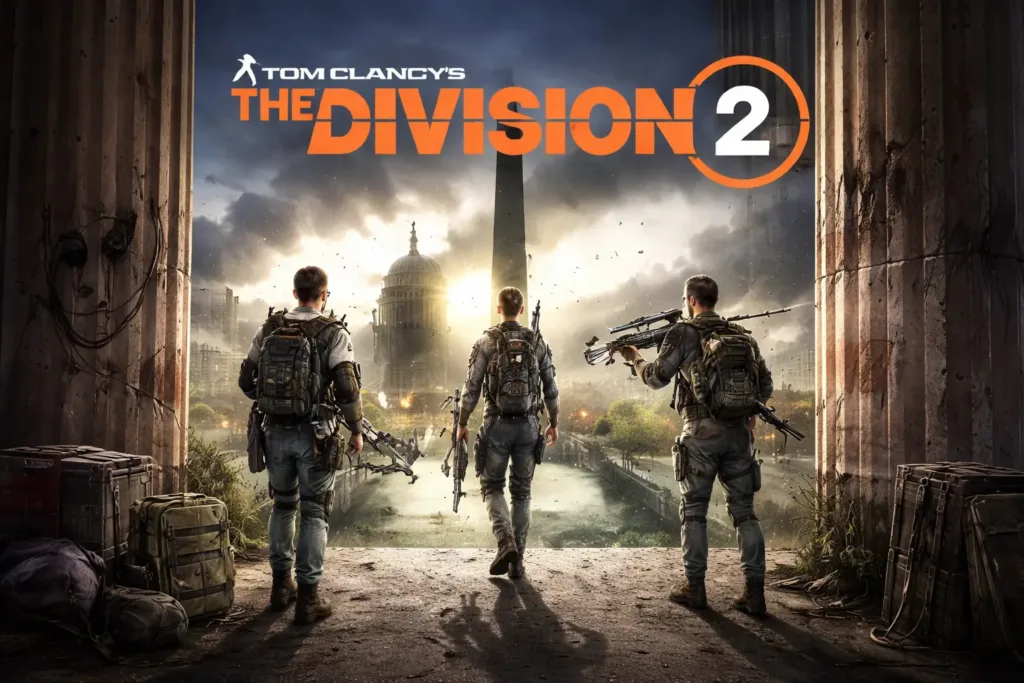
The Division 2. (Image: ABWaves Game)
Originally launched in 2019 as a direct sequel to the 2016 hit, which sold over 10 million copies, The Division franchise has now attracted more than 40 million players to date.
The team at Ubisoft Massive compares managing a live-service game to driving a bus. Senior Producer Fredrik Brönjemark notes that every passenger (player) has an opinion on the direction of development, and the key lesson has been never to take the fanbase for granted.
This contrasts with the metaphor used by Rainbow Six Siege VP François-Xavier Deniele, who described live operations as “changing the engine of a car while it’s still moving.” The Division team prefers the bus analogy to emphasize keeping players aligned with development decisions.
Technical restructuring and endgame focus
Creative Director Yannick Banchereau explained that the sequel was built to solve two core issues from the first game:
Technical Debt: The team rewrote old code to remove limitations that would have compromised future updates.
Inverted Development: The team started by designing the endgame first, only structuring the campaign after the long-term loop was defined.
While support was initially set to end in 2020 after Warlords of New York, allowing the studio to move to Star Wars Outlaws and Avatar: Frontiers of Pandora, the DLC’s success convinced Ubisoft to keep the game active.
Why the division 2 isn’t going free-to-play
Despite Rainbow Six Siege transitioning to a free-to-play model in 2025 (nearly a decade after its launch), the Division team has ruled out this path. Banchereau asserts that the current paid model works well, and Brönjemark added that a shift to free-to-play would require significant design adaptations that they do not feel are necessary at this time.
The fate of heartland and the rise of resurgence
In 2021, Ubisoft announced The Division Heartland, a free-to-play standalone title. However, the project was recently canceled as part of a 200-million-euro global cost-cutting plan. This restructuring led to:
The closure of development at Red Storm in March (105 jobs lost).
Layoffs at Massive and Ubisoft Stockholm in January.
Despite the cancellation, Brönjemark confirmed that lessons from Heartland were incorporated into The Division 2. Meanwhile, the franchise is expanding into the mobile market with The Division Resurgence, which is reportedly attracting interest even from non-traditional mobile gamers.
Future outlook
Eight years after the franchise began, the developers state that this year is the most ambitious yet in terms of planned content volume, proving that the game is not just surviving, but growing.