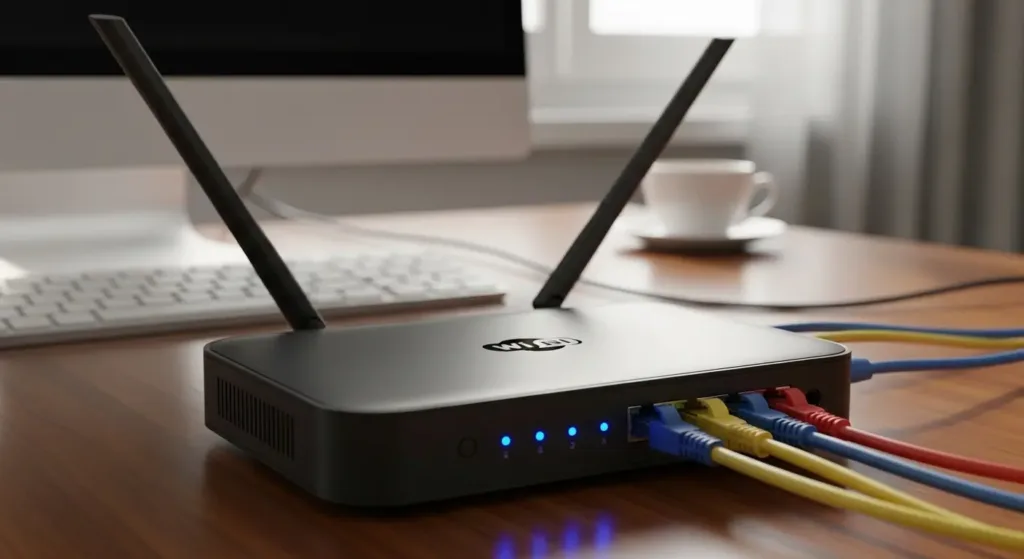
In a major shift for the U.S. tech market, a new regulatory “blacklist” requires future Wi-Fi routers to be domestically produced to ensure national security.
US blocks new foreign Wi-Fi routers. (Image: ABWaves Game)
The Federal Communications Commission (FCC) has launched a sweeping new policy that effectively bans the sale of all future consumer-grade Wi-Fi routers manufactured outside of the United States. The move follows a dire Friday assessment that foreign-made networking hardware poses an “unacceptable risk” to the nation’s digital infrastructure.
The “National Security Determination” cited by the FCC warns that cybercriminals, both state-sponsored and independent, are increasingly targeting the “small and home office” (SOHO) routers used by millions of Americans.
Historical Precedent: The agency specifically highlighted the 2024 Salt Typhoon attacks as a prime example of how vulnerabilities in foreign hardware can be weaponized against civilians.
The Goal: By mandating a move toward U.S.-based manufacturing, the government aims to eliminate “backdoor” access and secure the supply chain for critical home and business connectivity.
What this means for consumers and brands
The directive is forward-looking and does not immediately strip store shelves of current products.
Current Devices are Safe: If you already own a router or if a model has previously received FCC authorization, you can continue to use or buy it.
New Models Blocked: Any brand-new router model hitting the market must now be made in the USA to receive the necessary legal licensing for sale.
The Supply Chain Crisis: This presents a massive hurdle for industry leaders like TP-Link and Netgear, whose manufacturing hubs are largely concentrated in Southeast Asia (Taiwan, Thailand, and Vietnam).
The “conditional approval” loophole
The FCC has provided a narrow path for foreign manufacturers to remain in the U.S. market. Companies can seek a special waiver from the Department of War (DoW) or the Department of Homeland Security (DHS). However, this is not a simple paperwork exercise; applicants must provide:
Full transparency of their corporate management and ownership.
A comprehensive map of their global supply chain.
A concrete, time-bound plan to relocate their manufacturing operations to American soil.
A new era of tech protectionism
This move is the latest and most aggressive expansion of the 2021 Secure Equipment Act. While previous bans targeted specific Chinese giants like Huawei and ZTE, this new rule casts a wider net, impacting the global electronics ecosystem. As of now, it remains unclear if any major consumer router brand is currently equipped to manufacture at scale within the United States, suggesting a period of significant market volatility ahead.